
Protocol
A protocol built on intensive, repeated proprioceptive input.
The PediaSuit Method combines a soft proprioceptive orthosis with suspension-based training to align the body, load target muscle groups, and repeat movement patterns until they hold — in short, concentrated blocks of therapy rather than once-a-week sessions.
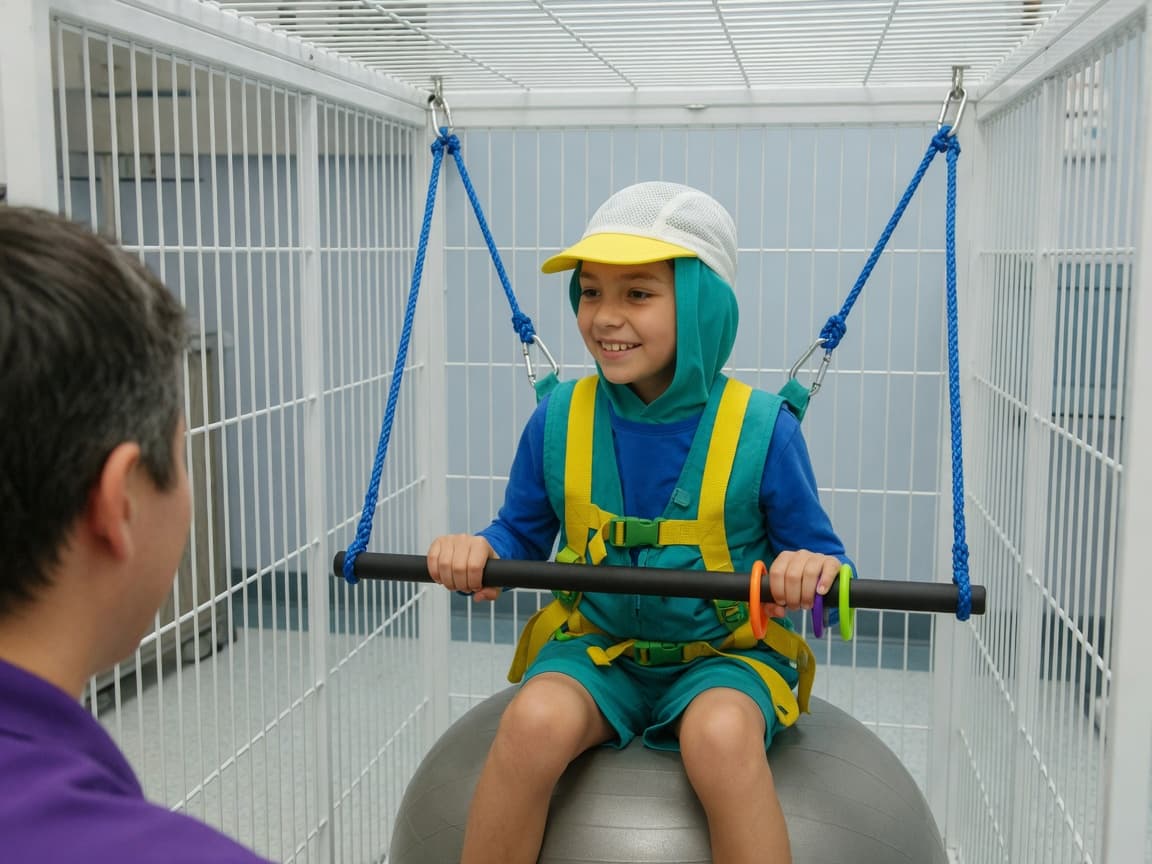
How a session works
Certified clinics run the protocol as an intensive block — typically several hours a day, five days a week, for two to four weeks. The suit provides constant postural alignment and graded resistance through its elastic bands; the Ability Exercise Unit adds suspended, gravity-reduced practice for gait and strengthening work the suit alone can't isolate.
The goal in every session is repetition: the same movement pattern, loaded and corrected, enough times in a row that the nervous system starts to hold onto it between sessions — not just during them.
What the suit does
Six connected pieces — cap, vest, shorts, knee pads, adapted shoes, and elastic bands — work as an external skeleton. It doesn't replace muscle activity; it gives the therapist a way to dial in exactly how much support and resistance a specific joint or pattern gets, session to session.
See the suit, piece by piece →Who it's for
Conditions clinics use the protocol for.
Certified providers apply the method across a range of pediatric and neurological presentations. It's a tool for your care team to prescribe, not a self-directed treatment — always work with a certified clinic to determine fit.
Where it comes from
Built on a lineage that started in orbit.
The suit traces back to Soviet spaceflight medicine, was adapted in Poland for children with Cerebral Palsy, and was redesigned as the modern PediaSuit by Leonardo de Oliveira — for his own son.
Read the full origin story →